


Remember when a company’s website was the company? You went there, did your thing, closed the tab. Today more and more websites are turning into billboards: a logo, a cookie banner, and a big fat “Download our App” button. The real service has moved into the phone, and the website is just the signpost pointing there.
My bank went first
Years ago my bank simply stopped updating its online banking portal. Then the Flash elements stopped loading, and for about two years it limped along half broken. Instead of fixing it, they killed it, in favour of the mobile app. An app that doesn’t even let me take a screenshot. A transfer confirmation, the one thing you sometimes really need as proof, and the phone shows a black screen.
Yes, i know why: banking trojans that read the screen or draw fake overlays are a real thing, and here in Thailand the scam wave was big enough that the rules got tightened (one device per account, face scan for bigger transfers). Fair enough. But the fix is blunt, and the cost lands on the customer, not on the bank.
Same kettle, different price
Bought a kettle on Shopee. Website: 163. Same checkout in the app, same login, same address: 112. To be fair, the website did offer me the voucher too, so they are pretty upfront about it. But the message is clear: the app is where the deals are, and the deals are bait. Fifty baht is a cheap price for a permanent spot on my home screen, push notifications, and flash-sale impulse buys for years to come.
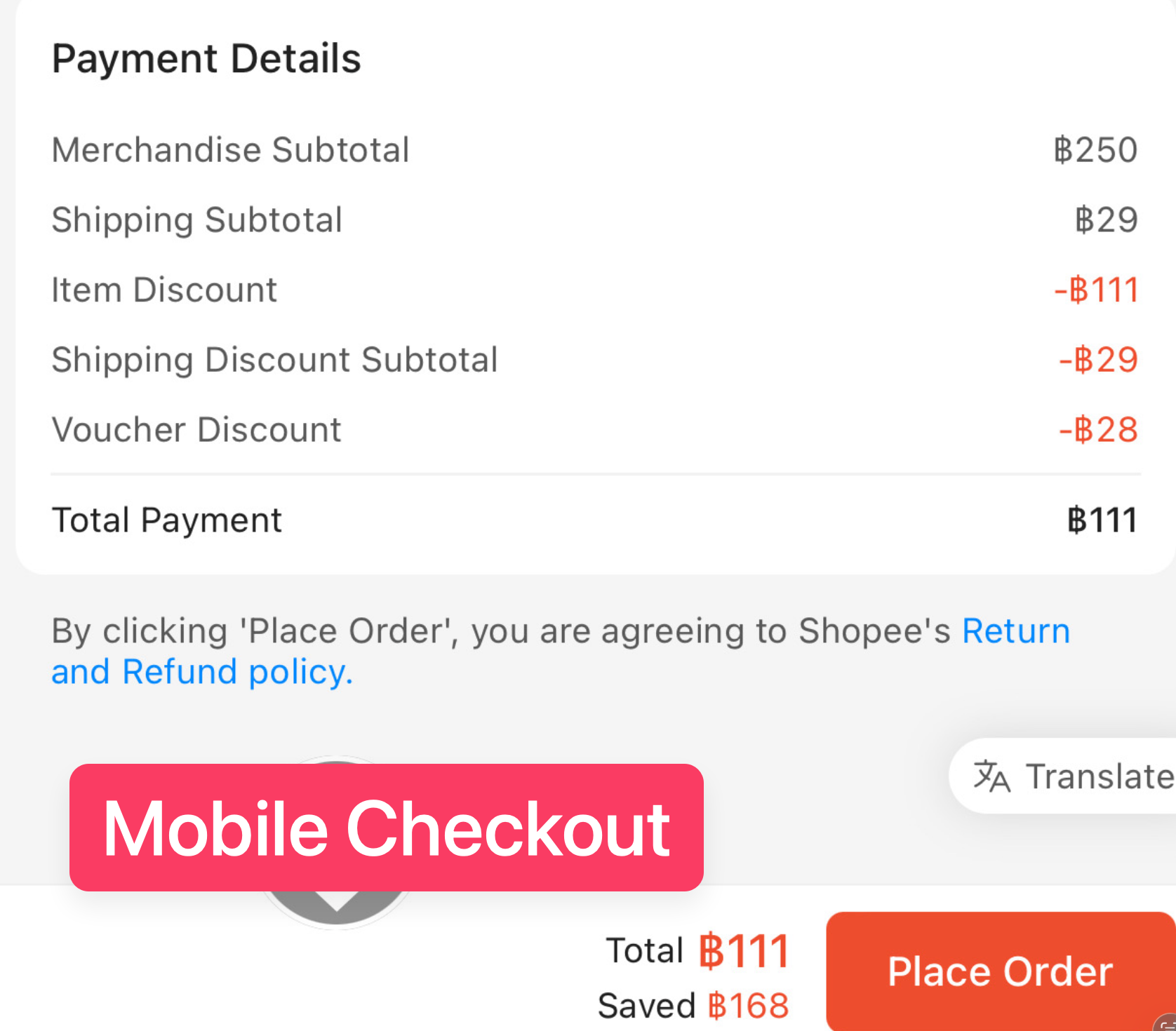
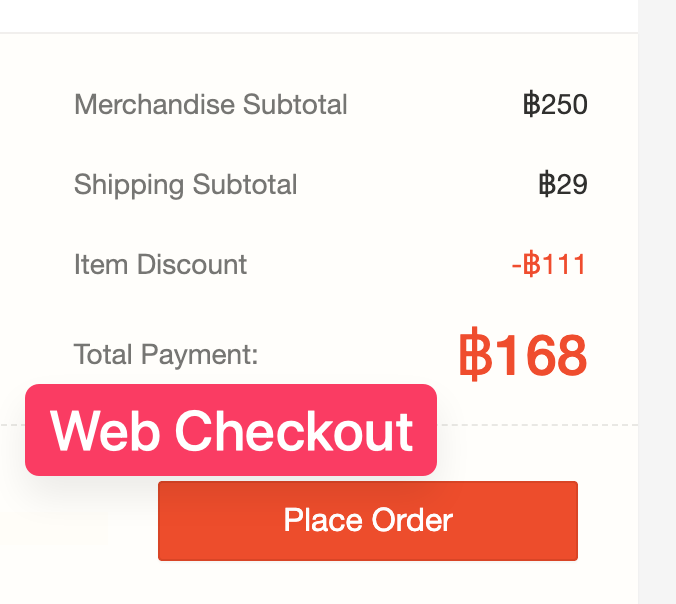
And comparing? On a desktop i have tabs, extensions, a big screen and copy & paste. In an app i have a tiny window, one product at a time, and whatever the app decides to show me. That’s not a bug, that’s the design.
Then there are the coins. Reviews with photos or videos give you more coins, so people upload photos. Not of the thing they bought, of course, that would mean getting up. Hundreds of reviews with the same copied product shots and videos, straight from the listing. Reward the metric and you get the metric, not the review. The most honest reviews left are the 2-3 star ones with a blurry photo of a kitchen counter.
The good part (yes, there is one)
Thailand has a massive advantage here, mostly because privacy is not such a hot topic. My bank app can just ask the electricity provider for my bill and prefill all the numbers. Paying electricity is literally one tap. In Germany this would take a data protection impact assessment, three consent forms and a committee.
But if i want to know anything about my electricity, usage, history, trends, it’s the official app. And because it’s mobile, the graphs look like a stickman show. Six bars, no scale, no way to scroll back far enough to compare three years ago with today. There’s simply not enough screen real estate to show it properly, so everything gets dumbed down.
Conveniently, a graph you can’t read is also a graph that doesn’t make you upset about rising costs. I’m not saying that’s the plan. I’m saying nobody seems to be in a hurry to fix it.
An app for everything
We’ve seen this movie before. Smart homes: every vendor had its own app, its own cloud, its own account, each worse than the other. Five apps to turn on four lights. The whole “smart” thing became completely useless, and when a vendor shut down its cloud, the hardware became e-waste. It took the industry years to admit it and come up with a common standard, and the people who actually enjoy their smart home today mostly went around the vendors entirely.
The opposite end is the mega app. WeChat does everything in China, but outside of China it’s just another messenger. Apple and Google own the platform, banks and regulators own payments, and nobody else gets to become a second operating system. So instead of one app that does everything, we got a hundred apps that each do one thing, badly, and each want my phone number.
The hardware tax
Here’s the part nobody talks about. A website runs in a browser, on a ten year old laptop, just fine. An app has a minimum OS version, and that minimum moves.
I’m still rocking an iPhone 8, because i refuse to pay the Apple tax every two or three years. Not everyone can drop a thousand dollars on a phone whenever a banking app decides iOS 16 is too old. And the day i do upgrade, i’m looking at a massive round of re-authentication: banks, credit cards, authenticator apps, device bindings, “this account is already linked to another device”. Call it security, and it is, but it also works beautifully as lock-in.
Moving a service from the web into an app quietly moves the cost of security and compatibility onto your hardware budget. The bank decides when you buy a new phone.
So why?
- Control. In the browser you are in charge: ad blockers, extensions, tabs, screenshots, save as PDF. In the app, they are.
- Tracking. Browsers keep cutting back on cookies and fingerprinting. An installed app gets a device ID, location and push notifications. An app user is worth a lot more than a web visitor.
- Cost. One platform instead of two. Let the website rot until the numbers say nobody uses it, then kill it.
- Security. Phone-bound authentication really is better than password + SMS. That’s the honest argument, and the one that gets used to justify everything else.
- Metrics. Downloads, daily active users, push open rates. Investors love them. A website you open twice a month to compare prices doesn’t produce any of that.
Taking away the choice
It’s not an easy question. Some of it is genuine security, some of it is just bad choices, and some of it is plain enshittification: make it convenient, make it the only way, then squeeze. I don’t mind apps. I mind when the app is the only option, and the website that used to do the job properly gets reduced to a billboard.
When the choice is simply taken away and people are pushed into an ecosystem, an app, or a specific phone they have to buy, it’s getting way out of hand. And it’s a growing annoyance in a growing number of places.
Keep the website. it’s not that hard!