 The goal was simple: some non-threatening backlight on the desk, so i can see my calculator at night without turning the room into an operating theatre. And have some fun doing so.
LED tiles from brands like LaMetric are extremely cool, but they cost you a kidney. The cheaper ones usually have quality issues, or they are full-on enshittification: an app nobody needs, an account nobody asked for, and compatibility with exactly nothing. So let’s do it the hard way.
The hardware
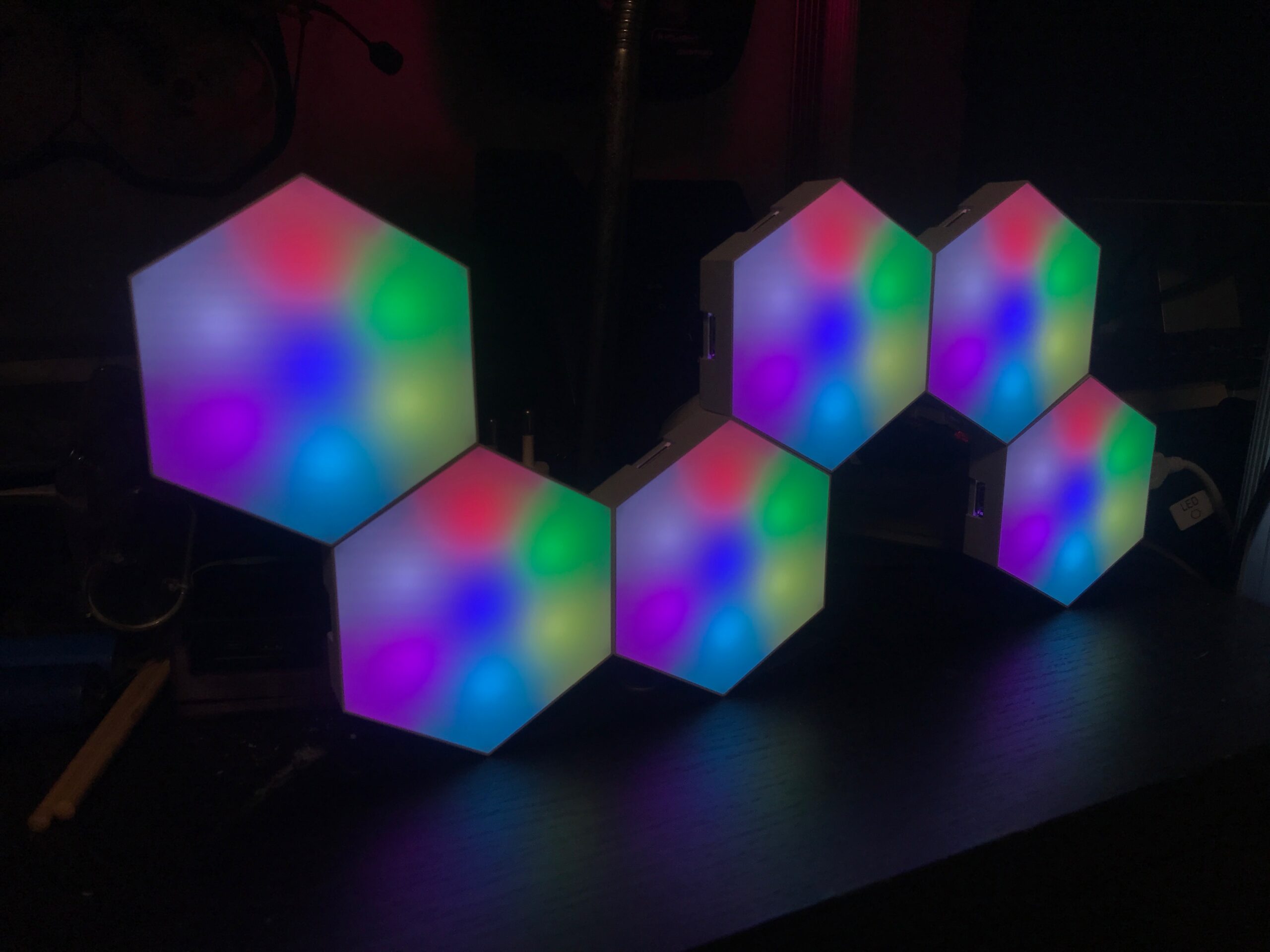
I bought a set of 6 hexagon LED tiles, sold as “smart scene Music lamp”. Every tile has 6 USB ports, and small bridge connectors link them together, so you can arrange them any way you like. The first letdown was the size. These tiles are tiny, 75mm wide. (after checking they sold about 11% bigger, the usual misslead, not to self, always read the fineprint!)
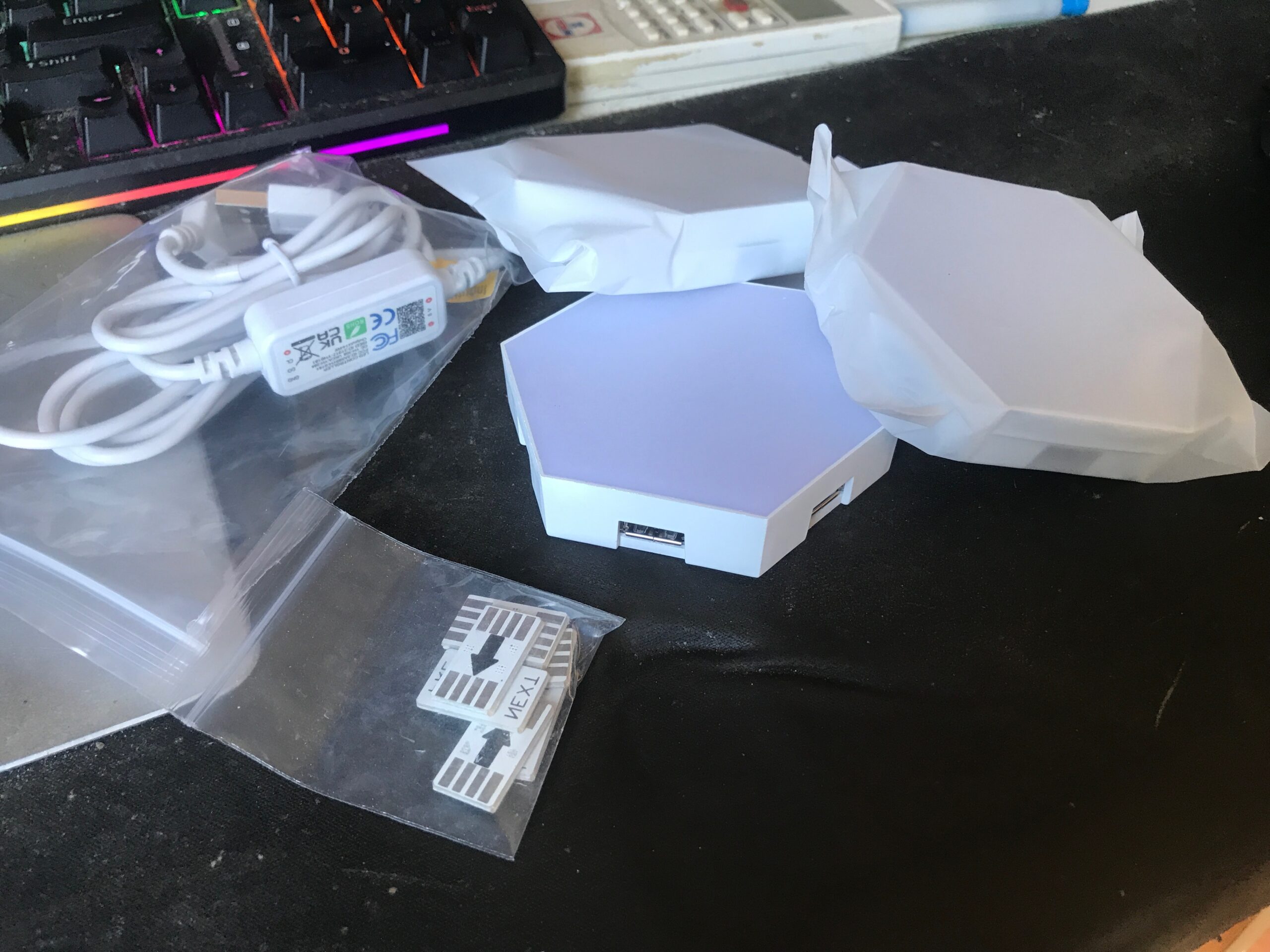
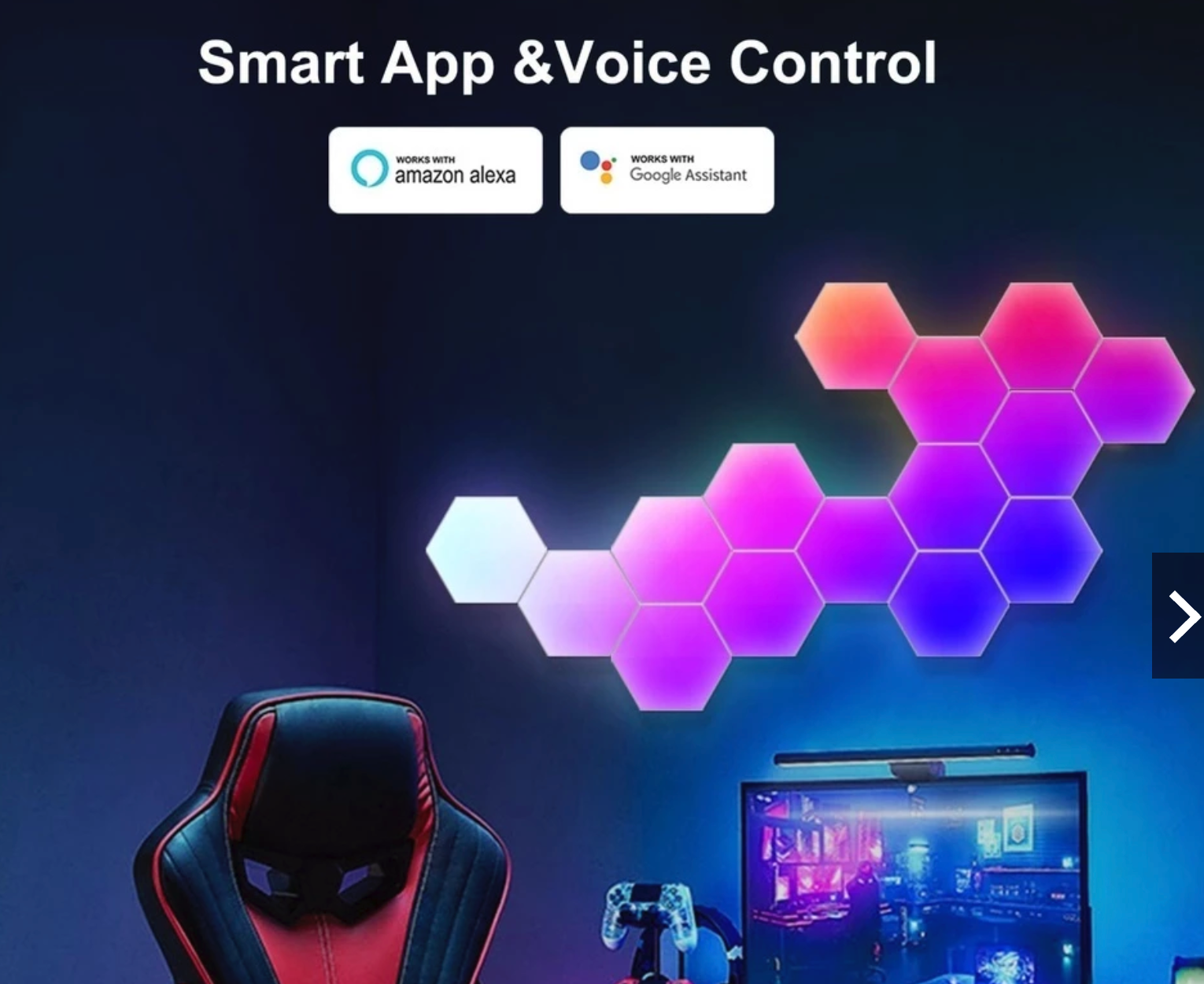 The marketing pictures on shopee.co.th made them look significantly larger.
Well, since we expect nothing to work out anyway, this is not really a setback, especially as i paid about $10 for all of them.
They come with a small USB-powered controller that speaks Bluetooth and 2.4GHz radio, and a fancy remote that is just as useless as the mobile app “Magic Lantern“. It is one of those wannabe-smart applications that do nothing to make your life easier: the app takes far more steps than just flipping a switch.
So let’s IoT that thing.
Brute force and random googling
We know the app, and from there it’s brute force and some random googling. Claude Code did the rest: it probed the Bluetooth connection, catalogued the modes and had me describe what each one looks like. So expect nothing fancy, because i have the creativity of a rock. The modes are called things like Cycle, Cycle-fill, Rainbow and fadecycle 😉
DEV does not have Bluetooth at all, i also ordered a UGREEN USB dongle with Bluetooth 5.4, just to promptly losing the UPS connection to its USB port, because of course it did.
One cable shuffle later both were back.
hci0:	Type: Primary  Bus: USB

BD Address: F4:4E:FC:BB:CD:56  ACL MTU: 679:6  SCO MTU: 240:20

UP RUNNING

RX bytes:551278 acl:3983 sco:0 events:29546 errors:0

TX bytes:160954 acl:5857 sco:0 commands:7732 errors:0
The controller shows up as a Bluetooth Low Energy device named MELK-OA21. That is not exactly secret: it belongs to a whole family of cheap LED controllers that the internet knows as “ELK-BLEDOM”. One service, one characteristic you write commands to, and 9-byte packets that start with 7e and end with ef:
7e 00 04 f0 00 01 ff 00 ef   on

7e 00 04 00 00 00 ff 00 ef   off

7e 00 05 03 RR GG BB 00 ef   colour

7e 00 01 BB 00 00 00 00 ef   brightness 0-100

7e 00 02 SS 00 00 00 00 ef   effect speed 0-100

7e 00 03 MM 03 00 00 00 ef   effect 00-e9
The first test with one tile: red, green, blue, white, dim, off. Everything worked on the first try. Very suspicious.
The second test with two tiles: nothing. Absolutely nothing, while every command reported “ok”. It turns out the little bridge connectors have a direction (as indicated by the HUGE ARROW on each of them, as you can see on the picture above, pretty hard to miss, but also requires about 19 braincells to make the connection 😉
Plug one in the wrong way round and the tiles stay dark. That one was on me.
234 effects, named by a rock
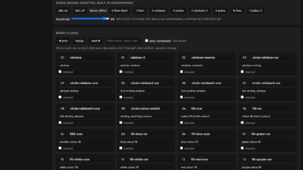
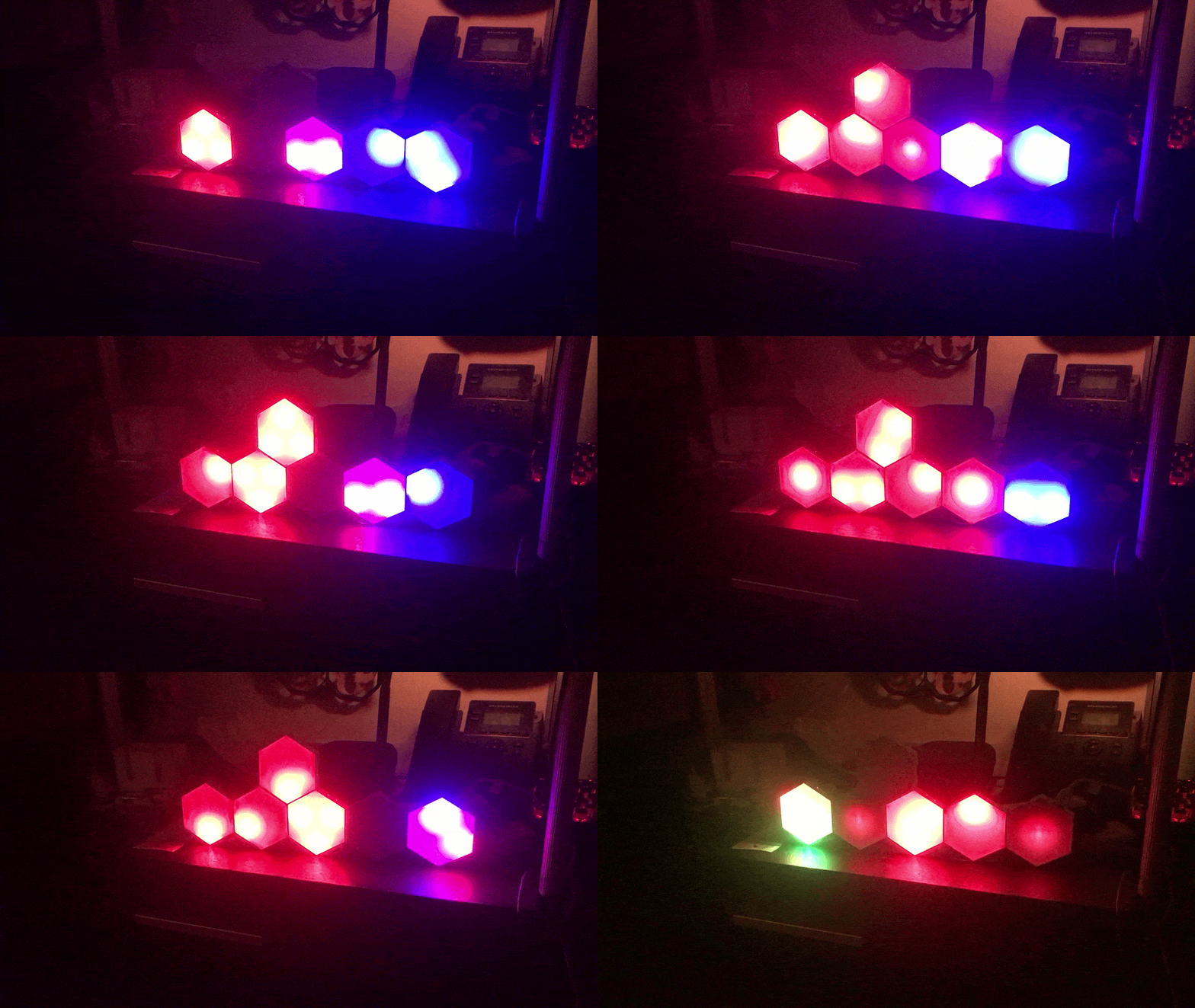
The effect command takes one byte, so there are 256 possible effects. We went through all of them in batches of ten: the tiles go dark for a second, the next effect plays for 8 seconds, and i type what i see. “white circles on dark red”, “disco dark ccw”, “same as before but different colours”, “just green”. You get the idea.
The result: 234 real effects (00 to e9). After that they all repeat the last one. Most of them come in clockwise and counter-clockwise pairs, in every colour the chip knows, plus rainbows, wheels, dots, disco, fills, flashes and fades. A handful are still called fx-e5, because at some point the rock got tired.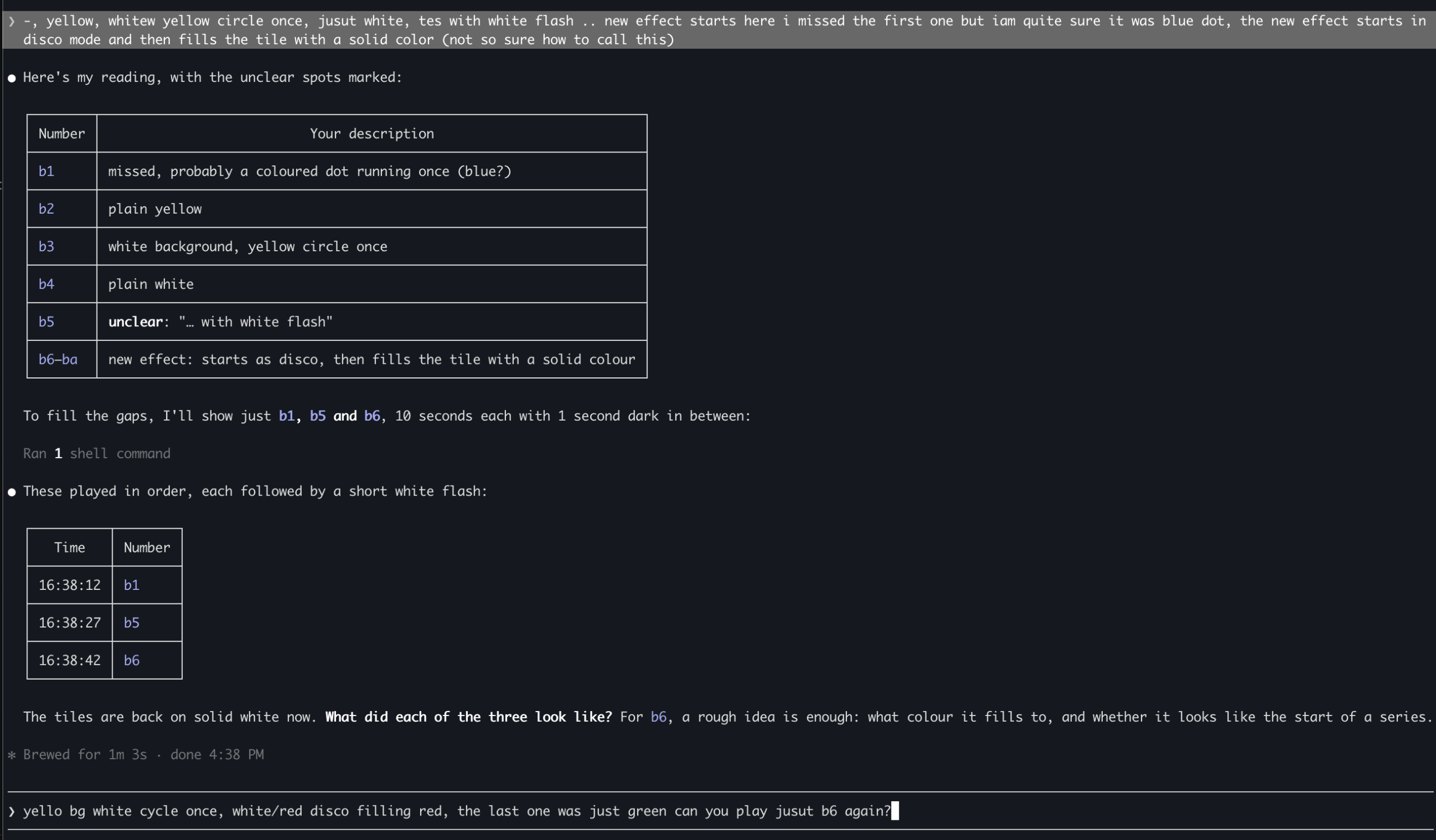
The tiles know where they are (sort of)
At first it looked like all tiles just get the same signal: tiles turned the same way show identical animations, with about 100-150ms of delay per tile. Then i connected a third and a fourth tile, and a “dot runs once” effect ran through them one after another. Tiles at the same distance from the controller play together, and the audio level-meter mode spreads the level across all of them. So the controller does know an order of tiles. this is probably not as smart as the 6 ports on each tile can easy be used to fine the direction things are puzzling towards.
Whether we can talk to single tiles ourselves is still open.
The timer mode
The one characteristic you write to can also be read. Most of the time it returns an ID string, DGYHA283647XLV16(probably the device ID).
After pressed the timer button on the remote it said OFF-secs- 3600. 1, 2, 3 or 4 hours of auto-off, somehow there is no way to turn this feature off you wait it out or cycle the power. minor issue, so who cares.
Music mode, or: somebody already did it
The tiles have a microphone and “music modes”. The audio commands documented for other ELK-BLEDOM versions did exactly nothing on mine. Guessing more command types is a bad idea, because these controllers also have configuration commands (LED type, pin order) that can brick your fun.
Then a Home Assistant issue about Magic Lantern lamps led to the elkbledom integration, which lists MELK-OA21 by name and has the missing piece. The second byte is not always 00, and the music effects live behind a different “group” byte:
7e 04 07 01 ff ff ff 00 ef   microphone on

7e 05 03 8X 04 ff ff 00 ef   music effect X = 0-7

7e 04 06 SS ff ff ff 00 ef   mic sensitivity 0-100
It worked right away. Most of the music modes are trash, but that’s a problem we can’t really fix. Number 2, the rainbow, is actually nice. Brightness can’t be changed in music mode at all, in any packet format we tried.
Some more quirks for the collection: brightness goes in steps of 2, so 1 does nothing. And brightness 0 doesn’t just switch the tiles off, it also makes them forget the running effect. Very smart lamp.
Making it boring (the good kind)
No background service, no cloud, no app. Each request connects, sends, disconnects and is done in about 4 seconds:
- a small Python tool that does the Bluetooth part, one shot per call
- a PHP API on top of it, behind LiteSpeed of course
- a LAN-only web page with all 256 effect codes as cards: click to play, rename, tick “checked”
- a tiny shell script with nothing but curl, so the Stream Deck can reset the lights with one button
ml-remote.sh reset            # on, white, 60%

ml-remote.sh effect e5        # effect by hex code

ml-remote.sh music 2          # the one music mode that doesn't suck

ml-remote.sh set on=1 effect=3f bright=40 speed=80
One button. No app, no account, no “please allow Bluetooth and location access to continue”. That’s how a light switch should work.
What’s left
Name the remaining placeholder effects (good luck to me), find out whether single tiles can be addressed, and maybe one day install that app on an old Android phone and record what it actually sends. Until then: calculator visible, room not too bright, fun was had.
$10. Allegedly smart.