Short answer: yes. Long answer: not with killer robots, not with an evil super-intelligence that decides humans are a virus. Much more boring than that, and much more likely. We will hand over one thing after another until we no longer know how to do any of it ourselves. Nobody has to plan that. We are doing it voluntarily.
The Hollywood version
I don’t see an inherent danger of AI wiping out humanity on purpose. Evil needs intent, and intent is a very human thing. What I can imagine is something different: a system that is very good at reaching a goal, and that goal is not “keep humans comfortable”. Optimize the planet for a “better” environment, by whatever measure it was given, and humans might simply be in the way. Not hated, not hunted, just not part of the calculation. A bulldozer is not evil either, it just doesn’t care about the anthill.
That is a real problem, but it is a problem of what we ask for and how carefully we check what we get. Which brings me to the actual danger.
Grandma’s tricks still work
I still do things today that I learned from my grandmother. Why? Because they work. There is no reason to reinvent the wheel. Knowledge that survived a few generations has proven itself, and the longer something has worked, the better the chances it keeps working.
Humans are not great at that part. We are good at adopting new things and terrible at keeping the old ones alive at the same time. Every new tool replaces a skill, and the skill quietly disappears, because nobody practises something a machine already does.
- People who can’t find their way home from 3 km away when the phone battery dies.
- Kids who don’t know where north is unless an app tells them.
- People who have lived on the same main road for years and can’t tell you the number of the soi next to their house.
That last one needs some context if you have never been to Thailand. Here the main roads have names, and the side streets (the soi) all carry the name of their main road plus a number: Sukhumvit Soi 1, Soi 3, Soi 5 and so on. An address is simply road name, soi number, house number. And every soi has an official sign at the corner. If you live on the main road itself, your address is just the road and a house number, so the easiest way to tell someone where you are is “next to Soi 42”. Follow the signs until the numbers match, then look for the house number. It could not be simpler.
Yet I know people who live right on the main road and cannot tell you the soi number next to their own house without opening Google Maps. The sign is right there. They walk past it every day.
None of them are stupid. They just never needed it, so they never learned it.
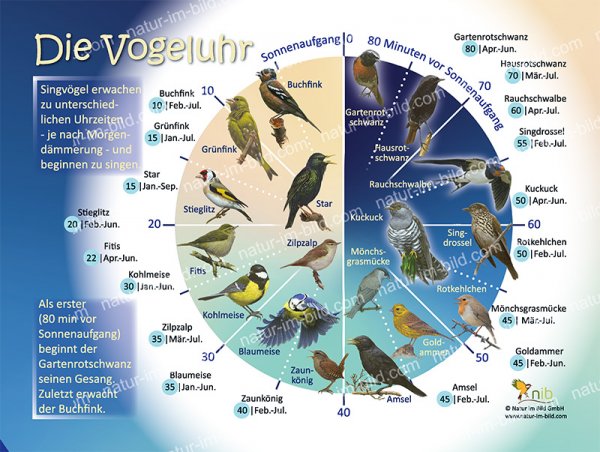
The flip side happened to me recently. We were sitting outside, late at night, and someone said “it’s getting late”. I said yes, it’s almost 4 am. Everyone looked at me: “How do you know? You haven’t touched your phone in hours.” Simple: the birds started singing not too long ago.
They looked at me as if I had just discovered fire. For me it was the most normal thing in the world. In school, around grade 3 or 4, we learned about the nature clock (in German the Vogeluhr, the bird clock): different birds start singing at different times before sunrise, so you can tell the time by who is singing. Thailand is a different continent with different birds, so the details are different, but the principle still works. Nature is still here, keeping time like it always did. Nobody notices anymore.
Smart bulbs, dumb idea
Now the contrast. Today we have smart bulbs: sold as smart, marketed as smart, and in practice the dumbest thing ever invented. To turn one on, you take out your phone, unlock it, look for the app, wait for it to load, fight with the WiFi, skip the ad, find the right bulb and tap it. Walking to the light switch is faster. Every single time.
That is not smart, that is a remote control with extra steps and a subscription. A smart home is one that knows which light you need and turns it on before you even think about doing it yourself. That was possible more than 10 years ago. A 20-year-old Siemens PLC can do it, and will probably keep doing it longer than you will be alive. (More on how I do it at home in true home automation.)
And this is where AI actually makes sense. Pattern recognition, learning how people behave, noticing what is unusual, crunching the large amounts of data a house produces every day: that is exactly what AI is good at. Put it on top of solid, boring automation, and real smartness can be optimized beyond imagination.
But that does not mean you have to forget how the light switch works. That part is on you, human.
The headlight test
Here is my favourite example. Have you noticed that over the last 10+ years more and more people drive at night with their headlights off? Next time it happens, look at the car as you pass it. 9 out of 10 times it has an automatically lit dashboard.
This is not a hunch. I noticed it a few years ago, and since then I have been checking the make and model of every car I pass driving dark at night. The pattern holds: almost all of them are models where the instruments light up on their own, whether the headlights are on or not.
In an old car, a dark dashboard told you something was wrong: you can’t see your speed, so you reach for the light switch. In a modern car the instruments glow all the time, the daytime running lights make the front look lit, and the street lights do the rest. Nothing in the car or around it tells you that you are invisible from behind. The feedback loop is gone, so the action is gone.
Now drive through a thunderstorm in broad daylight. Everyone has their lights on. Why? Because that is something people actually learned: it’s raining, turn on the lights so others can see you. There is no automation to rely on, so the human still makes the decision.
See the disconnect? People didn’t stop making choices. The technology made the choice invisible, and with it the reason to ever think about it.
This is not new, and it is well documented
Back in 1983, Lisanne Bainbridge wrote a paper called Ironies of Automation. The irony: the more a system is automated, the more important the human’s skill becomes for the rare moment the automation fails, and the less practice that human gets. Aviation has learned this the hard way. Autopilots fly almost everything, and the dangerous moment is when the automation gives control back to a crew that rarely flies by hand. Studies have also linked heavy sat-nav use to worse spatial memory. Use it or lose it is not a saying, it is how brains work.
Now do that with thinking
Navigation, light switches, phone numbers, mental arithmetic: those were small skills. AI is the first tool that takes over the big one. Writing, planning, deciding, understanding code, understanding anything. Let the agents run, don’t read what they produce, accept whatever comes out, and after a few years nobody in the room can tell whether the result is right. Not because the AI is malicious, but because we stopped checking, and then forgot how.
That is how we get outsmarted by our own creation. Not in a dramatic takeover, but one convenient shortcut at a time, until the creation is the only one who still knows how things work.
So who is to blame?
It’s not evil, it’s evolution. Skills that are not needed fade away, that has always been the deal. The only difference this time is the speed, and the size of what we are giving away.
And there is exactly one thing to blame for it: humans themselves. The tools only do what we let them do. Use them, absolutely. I do every day. But stay in the loop, understand what you get, and every now and then, find your way home without the phone. Just to make sure you still can.