

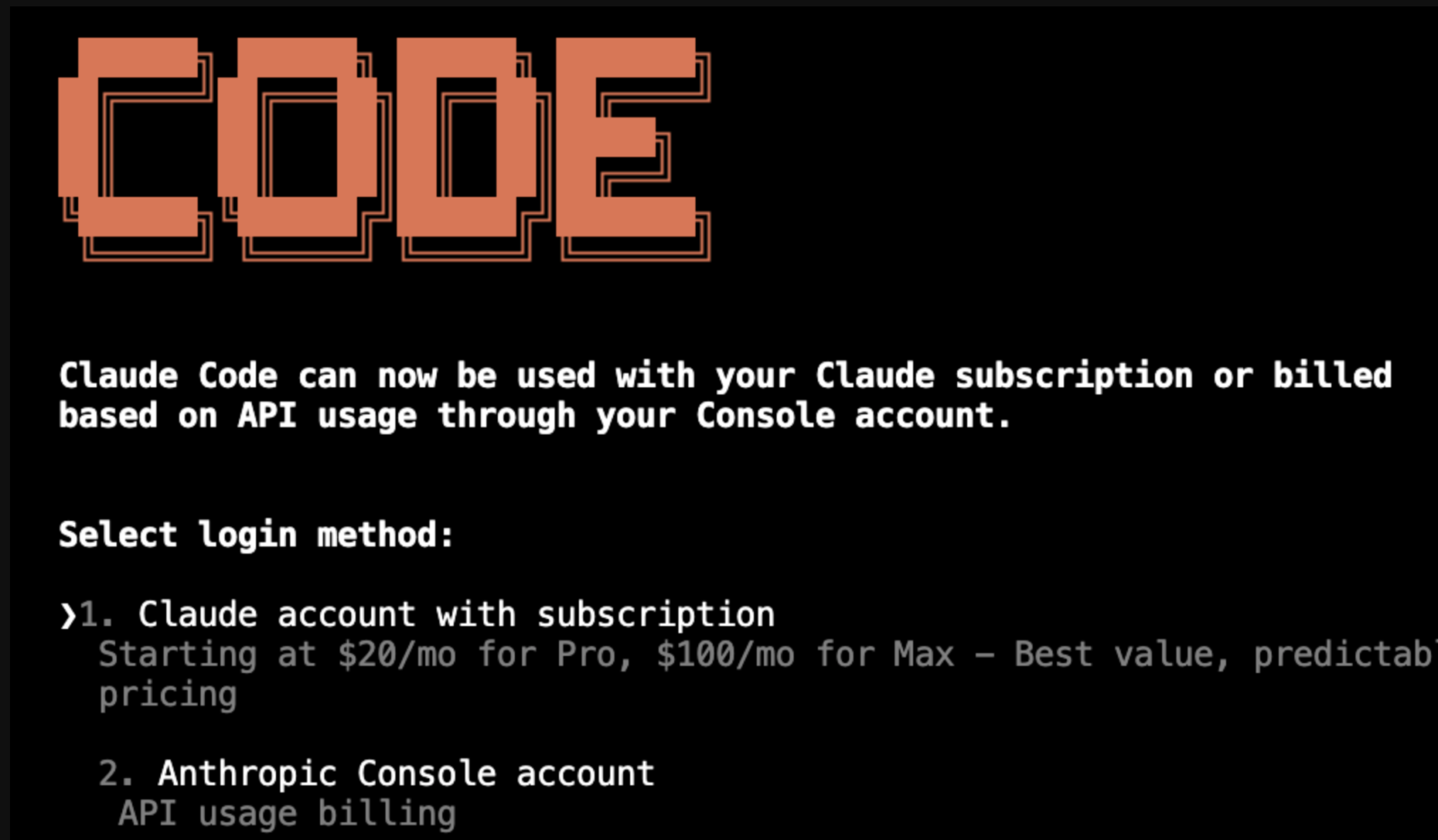
I pay about $17 a month for my Claude subscription (a discounted offer, the regular price is $20). I fed my own Claude Code usage of the last two months or so into the official API price list, and the same work would have cost $330. That is roughly $165 a month of compute for $20. That is not a discount, that is a subsidy. And subsidies end.
The numbers
About two months of me poking at code, websites and servers with an AI assistant. Nothing heavy, no big projects, just the everyday stuff:
Input: 13.8k tokens

Output: 5.7M tokens

Cache write: 17.2M tokens

Cache read: 651.1M tokens

Total: 674M tokens, 96.6% of them cache reads
Priced at the public API rates, that comes out like this:
| Model | API cost | vs. Opus 5.5 |
|---|---|---|
| Claude Opus 5.5 | $330.28 | baseline |
| Claude Sonnet 5.5 | $230.25 | -30% |
| GPT-6 Sol (ChatGPT Plus default) | $230.25 | -30% |
| GLM-5.3 (Z.ai) | $218.47 | -34% |
| GPT-6.1 Sol (Codex / Work) | $165.14 | -50% |
| DeepSeek-V4-Pro (peak / off-peak) | $73.94 / $36.97 | -78% / -89% |
| DeepSeek-V4.1-Flash (peak / off-peak) | $15.91 / $7.96 | -95% / -98% |
Even the “cheap” options are around 10 times the $20 list price, and ChatGPT Plus is in exactly the same spot: around $20 a month for usage that would cost $165 to $230 at its own API prices. The subscription is the outlier, not the API.
Where the money actually goes
The interesting part is not the output. The answers I got (5.7M tokens) are only about a third of the bill. The rest is the model re-reading the same context over and over: every step of an agent re-sends the whole conversation, the files it looked at, the tool results. Cached, that is cheap per token, but 651 million cheap tokens are still $130. Writing those caches is another $86.
That is the thing nobody tells you about agent-style AI: the cost does not scale with how much it says, it scales with how long it keeps working and how much it has to remember while doing it. Chatting is cheap. Letting it work is not.
Why the subscription is so cheap
A few reasons, and none of them are permanent:
- The gym model, which does not work here. The usual explanation is that light users pay for heavy users, like a gym where most members never show up. But a gym is a fixed room: one more member costs almost nothing. Compute is not a room, every single token burns electricity on a GPU somebody paid for. It only takes a small group of people like me to eat what millions of birthday-poem users pay in. And I am not even a heavy user: no big projects, just everyday tinkering, and still around 680 million tokens in about two months. Agents make that the normal case, not the exception. Every time one of these tools becomes more useful, more of its users turn into the expensive kind without even noticing.
- Market share is worth more than margin right now. Every provider is buying users with investor money, because whoever owns the habit owns the market later. That is a race, and races end.
- Lock-in is the actual product. The cheap subscription is not only buying users, it is buying habits. Your workflows, your project notes and instruction files, the prompts tuned to how one model thinks, the editor plugins, the team that only knows this one tool. None of that moves to another provider with a click. I wrote about this in Avoid Vendor Locking, and the rule from there applies here too: if leaving a provider feels impossible, you are already locked in. Once everyone is in that position, the price can go wherever the provider wants it to, and people will simply take the hit and pay the bill, because rebuilding everything costs even more.
- List prices are not costs. The API price is what the market tolerates, not what the electricity costs. Cache reads in particular are probably much cheaper to serve than they are to buy. So the gap is partly subsidy and partly margin, and nobody outside these companies knows the ratio.
Avoiding lock-in may not even be an option
Normally my advice is simple: keep things portable, so you can leave when the deal gets bad. With AI that only works halfway. Yes, there is an open-ish standard: most providers and local tools now speak the API format OpenAI made popular, so switching the endpoint is easy. But the endpoint was never the expensive part. The compute behind it is.
Every time this comes up, someone says “just run it at home”. Those people are either not doing the math, ignoring it, or lying about it. A rough version, with optimistic numbers:
- Hardware: a machine that runs a decent open model at a usable speed is more like $20,000. That is not a frontier model, that is the one a step or two below.
- Subscription: $20 a month, $240 a year. The hardware alone is over 80 years of subscription.
- Electricity: around 1 kW under load, 8 hours a day, at Thai prices is roughly $300 a year. Before cooling, and in Bangkok you need cooling. That is already more than the subscription costs, so against today’s price you never break even. Not in 80 years, not in a century, never.
- Against the real API price ($165 a month for my usage), it pays off after about twelve years, if the machine could keep up with that workload, which it can’t.
And twelve years is a joke at the speed this is moving. A machine that costs more than a car can be useless in a year or two, when the next generation of models needs twice the memory. You are not buying an appliance, you are buying a ticket for one season.
So the exit door exists, it is just priced so that almost nobody can use it. That is exactly the position a provider wants you in before the prices change.
Enshittification is already warming up
You can see the pattern starting: weekly usage limits, “fair use” rules that get tighter every few months, the good model reserved for the expensive tier, the cheap tier quietly getting the smaller model. It is the same playbook as every platform before: be great for users, then be great for business customers, then be great for shareholders. Step one is where we are now. Enjoy it while it lasts.
The difference this time is that the bottleneck is physical. Datacenters need chips, power and cooling, and all three are already short. When demand keeps growing and supply cannot, prices do not go down. That is the new kind of scarcity I expect: not “the service got worse”, but “the service exists and you cannot afford enough of it”.
The question nobody asks: where is the token market?
Electricity has a spot market. Bandwidth has exchanges. Cloud servers have spot instances. Compute for AI is the most demanded resource of the decade, and there is no open market where providers compete on price for the same unit of work. Every provider sets its own price, in its own currency (tokens), measured with its own ruler (tokenizer), for its own product. That is not a market, that is a menu.
To be fair, there are reasons:
- A token is not a token. Different models split text differently, and a token from a frontier model does more work than one from a small model. Without a common unit, nothing is tradeable.
- The frontier models are closed. Only the company that owns the weights can sell them, so there is nobody to compete with on the same product.
But look at the open-weight models (DeepSeek, GLM, Qwen and friends): the same model is hosted by dozens of providers, routers send your request to whoever is cheapest or fastest right now, and prices for those models keep falling. That is what a token market looks like, and it works. It just does not exist for the models everyone actually depends on for serious work.
And that is the alarming part. A market would balance load across datacenters, put an honest price on compute, and keep every provider honest. The fact that the biggest players have no interest in one tells you how they plan to make the numbers work later.
What I am doing about it
Honestly, for me there is no alternative to the subscription. What I can control is how I use it.
- Staying in the loop. I try to stay on top of things and actually understand what has been created. That has a side effect: I ask specific questions, and specific questions reduce guessing. Guessing is not cheap, every wrong guess is another round of reading, trying and re-reading. Give a tool like Claude Code one clear problem and it does what it does best: look at exactly that, do what was asked, done. Fast, and the token count stays low. And that is with me in the loop. The 680 million tokens above are the disciplined version.
- Not building anything that only works at today’s prices.
- Watching my own numbers. If you use these tools seriously, check what your usage would cost at API prices. That is roughly the price you will pay once the subsidy is gone.
The current trend goes the other way: “just get it done”, start a few agents, let them run amok overnight and look at whatever comes out. No human brain in the loop, so the machine has to guess everything, and pays for every guess in tokens. That works exactly as long as someone else pays the bill. Once compute is priced for real, that style of working will end very quickly, and the people who still understand what their tools are doing will be the ones who can afford to keep using them.
The AI itself is not the problem. It is genuinely useful, this post was drafted with it. The problem is that we are all getting used to a price that does not exist.